
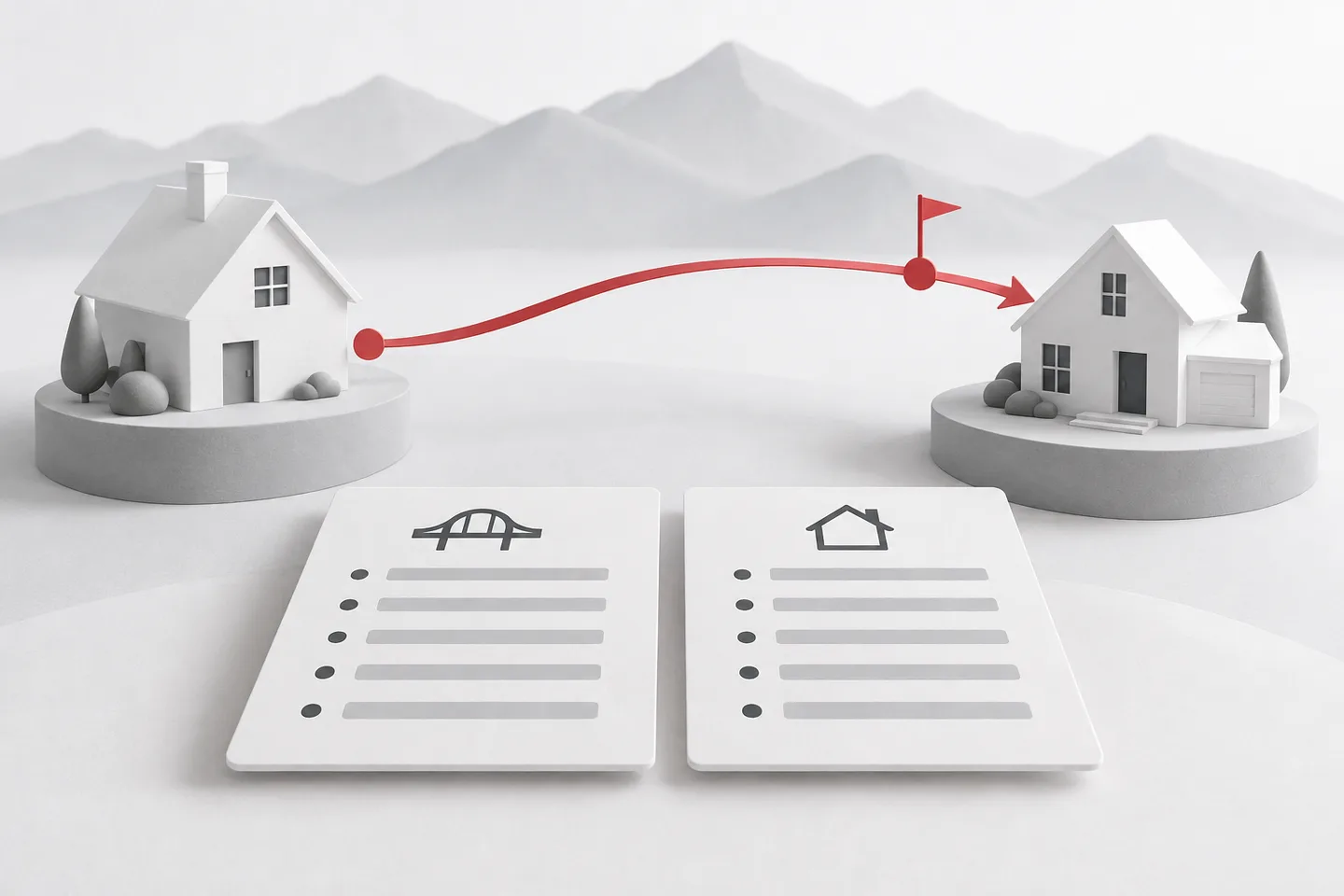
Buying a new home before selling your current one raises a practical question: where will the purchase cash come from before the sale closes? A bridge loan and a home equity line of credit (HELOC) may each fill that gap, but their repayment terms differ. Compare written offers for a sale that closes on time, closes late or brings in less than expected.
Ask lenders to price the same borrowing amount and sale dates. Include the new purchase mortgage: temporary debt affects your closing cash and the payments you carry while owning two homes.
Identify the equity source and repayment event
A bridge loan is temporary borrowing intended to cover a gap between transactions. Federal mortgage rules describe a temporary bridge loan of 12 months or less using the example of a buyer purchasing a new dwelling while planning to sell a current one. That regulatory example does not set the term of any particular offer; the lender’s documents must do that. Read the CFPB’s bridge-loan provision alongside the proposed agreement.
A HELOC is a line of credit secured by a home. You draw from an approved limit and repay according to the line’s terms. The CFPB’s HELOC booklet explains that a line commonly has a draw period, may have a variable rate and is generally paid off when the securing home is sold.
For either offer, have the lender mark the property used as collateral. Is the loan secured by the home you are selling, the home you are buying or both? Then identify the event that makes repayment due. “We plan to repay from sale proceeds” is your plan; a maturity date, sale-triggered payoff or other contractual requirement is the lender’s term. Ask for a payoff illustration showing how the existing mortgage and the new borrowing would be cleared from a lower-than-expected sale price.
Equity is not the same as cash available for the next closing. A lender may approve less than the difference between the current home’s estimated value and its mortgage balance. Fees can further reduce usable proceeds. Write down the amount you can actually draw, when it becomes available and any condition still outstanding before you rely on it for a purchase deposit or closing.
Compare what you will pay while both homes are yours
Request written terms for the bridge loan and the HELOC using the amount you expect to borrow. For the bridge loan, ask whether funds arrive in one advance or in stages, whether the rate is fixed or variable, how interest is charged and whether each payment reduces principal. Record the maturity date and the balance expected at that date.
For the HELOC, record the credit limit, initial draw, minimum draw or balance, draw-period payment and later repayment terms. If the rate varies, ask for the index, margin, adjustment frequency, any introductory rate and the applicable cap or floor. An interest-only draw-period payment leaves the borrowed principal to be repaid later.
Put every charge on the same page: origination or application fees, appraisal and title charges, other closing costs, annual or transaction fees, and any charge for paying off or closing the loan soon after the old home sells. Ask whether a quoted waiver depends on keeping a HELOC open for a minimum period. A short borrowing window gives upfront and early-termination charges particular weight, even when the advertised rate appears attractive.
Compare interest over the expected borrowing period and a longer one. Neither product is necessarily cheaper without the actual amounts, offers, draw dates and payoff dates.
Use a sale-delay comparison worksheet
Choose an expected sale-closing date and a later date you could realistically face. Give both dates and the same proposed borrowing amount to each lender. Ask for written payment and payoff figures at each date, including the rate assumption for a variable-rate offer. Record these items for each:
- Property securing the debt and cash available by purchase closing.
- Rate changes, upfront charges, ongoing fees and early-closure charges.
- Monthly payments and remaining principal at the expected sale date.
- Additional payments and interest if the sale closes late.
- Balance due at the later date, contractual deadline and any payoff shortfall.
Next add the costs that neither temporary-loan quote captures: payments on the old and new mortgages, taxes, insurance, utilities and upkeep for both homes during the extra months. Keep those costs as a separate line so you do not accidentally count them twice. Compare the total cash leaving your household with the reserve you want to retain after closing.
Run a second version with a lower net sale-proceeds figure. A late sale adds carrying costs; a lower sale price can leave a payoff shortfall. Together, they show whether the plan depends on receiving a particular price by a particular date. Ask the lender what the contract permits if the temporary debt comes due first. Do not enter “extend the loan” or “refinance” as a fallback until a lender has explained the conditions in writing.
Take these questions to each lender
- Funding: What must happen before funds can be drawn, and will they be available in time for the purchase closing? Does an appraisal or another approval remain outstanding?
- Security: Which home secures the debt? Will the proposed borrowing change the approval, required cash or closing schedule for the new mortgage?
- Payments: What is due each month before the old home sells? How much principal remains after those payments? If the HELOC rate rises under its terms, what payment would the lender illustrate?
- Payoff: When does repayment become mandatory? What are the payoff and account-closure steps at the old home’s sale, including notice and any fees?
- Delay: If the sale misses the planned date, what is the next contractual deadline? What charges or changes follow, and which possible extension terms are merely subject to a new approval?
- Shortfall: If net sale proceeds are lower than expected, how much cash must you provide to release the lender’s claim and complete the sale?
Ask the lender to answer against the specific offer, not a typical product description. Keep the dated disclosures, fee schedule and lender responses together. If a term changes, update the worksheet and the household cash-flow plan before deciding whether the purchase still works.
Keep the purchase mortgage’s timing visible
The new mortgage has its own application and closing deadlines. The CFPB says a lender may revise a Loan Estimate if a borrower waits more than 10 business days after receiving it to express an intent to proceed. Review the CFPB’s explanation of intent to proceed while tracking the dates on your own documents.
Check whether the purchase-mortgage rate is locked, when that lock expires and what an extension would cost. A Loan Estimate shows whether the rate is locked, but the CFPB notes that it does not provide the cost of extending the lock; ask the lender directly. The CFPB’s rate-lock guidance also explains why the agreed time frame matters when closing moves.
Before committing to purchase deadlines, confirm the cash available at closing, payments during an extended overlap and amount due when the current home sells. If either offer leaves a gap you cannot cover, revise the purchase or sale plan.